

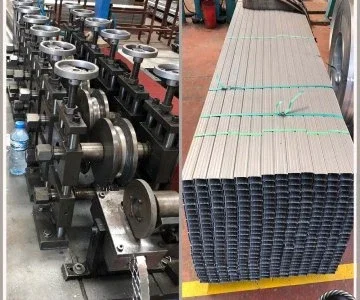
Types of Gypsum Board Profiles
The material released to the market with gypsum placed between two cardboard sheets is called drywall. Drywall is the name given to sheets that have a smooth surface, come in special sizes, and meet certain standards.
The areas where it is used are generally the interior walls of houses in the final stages of construction. Interior walls are covered from floor to ceiling, providing many advantages such as insulation.
With its reasonable cost, drywall also comes in many varieties. Drywall profile types are named according to the area where they are used and the model employed.
Each advantage provided by drywall profile types saves both time and money. There are varieties such as water‑resistant, heat‑resistant, and lightweight drywall.
It is also a convenient interior cladding material because it can be produced in desired sizes. Drywall Types and Advantages With many advantages and numerous features, drywall and drywall profile types have become indispensable in the construction sector, offering the best prices for the areas where they are used.
Drywall profile types prevent bacterial growth with their pH value and do not rot. Experiments have been conducted on fire resistance, and it has been observed that it can withstand fire for about half an hour.
Homes can be covered with drywall to protect against fire. Drywall is also a material that is earthquake‑resistant; its durability comes from the flexibility in its composition.
Drywall varieties that are both flexible and lightweight do not add weight to buildings. Thus, when considering both earthquake and fire resistance, drywall varieties are a perfect fit.
Within drywall varieties, water droplets are present, which help keep the moisture level of the environment balanced. Drywall profile types chosen for insulation serve as insulation against both heat and sound, and they provide insulation coating at a more affordable price compared to other materials.
They have a thin structure, and the interior cladding does not cause shrinkage in your spaces. Installation and mounting can be easily performed.
They are suitable in many ways for modern structures and have become a must‑use interior cladding material in modern buildings. Drywall and drywall profile types, which provide so many advantages, can be produced in sizes suitable for the area to be used and offer ease of use.
Drywall Sizes Drywall profile types can be produced in sizes suitable for the areas where they are used, and production is available upon order. Thickness will vary depending on the wall, but on average it is produced between 6 mm and 18 mm.
Width dimensions also vary by request, but on average they are produced between 120 cm and 125 cm. Drywall profile types also vary in edge shapes according to the area where they will be used.
They are produced in flat, ribbed, or semi‑circular shapes, providing ease in mounting. Prices vary according to all sizes and the chosen varieties that are water‑resistant, heat‑resistant, or both heat‑ and water‑resistant.
The selected drywall profile types are divided into profiles according to use in suspended ceilings or partition walls. Suspended Ceiling Profiles Ceiling C Profile Ceiling U Profile Partition Wall Profiles Wall C 50 Profile Wall C 75 Profile Wall C 100 Profile Wall U 50 Profile Wall U 75 Profile Wall U 100 Profile