

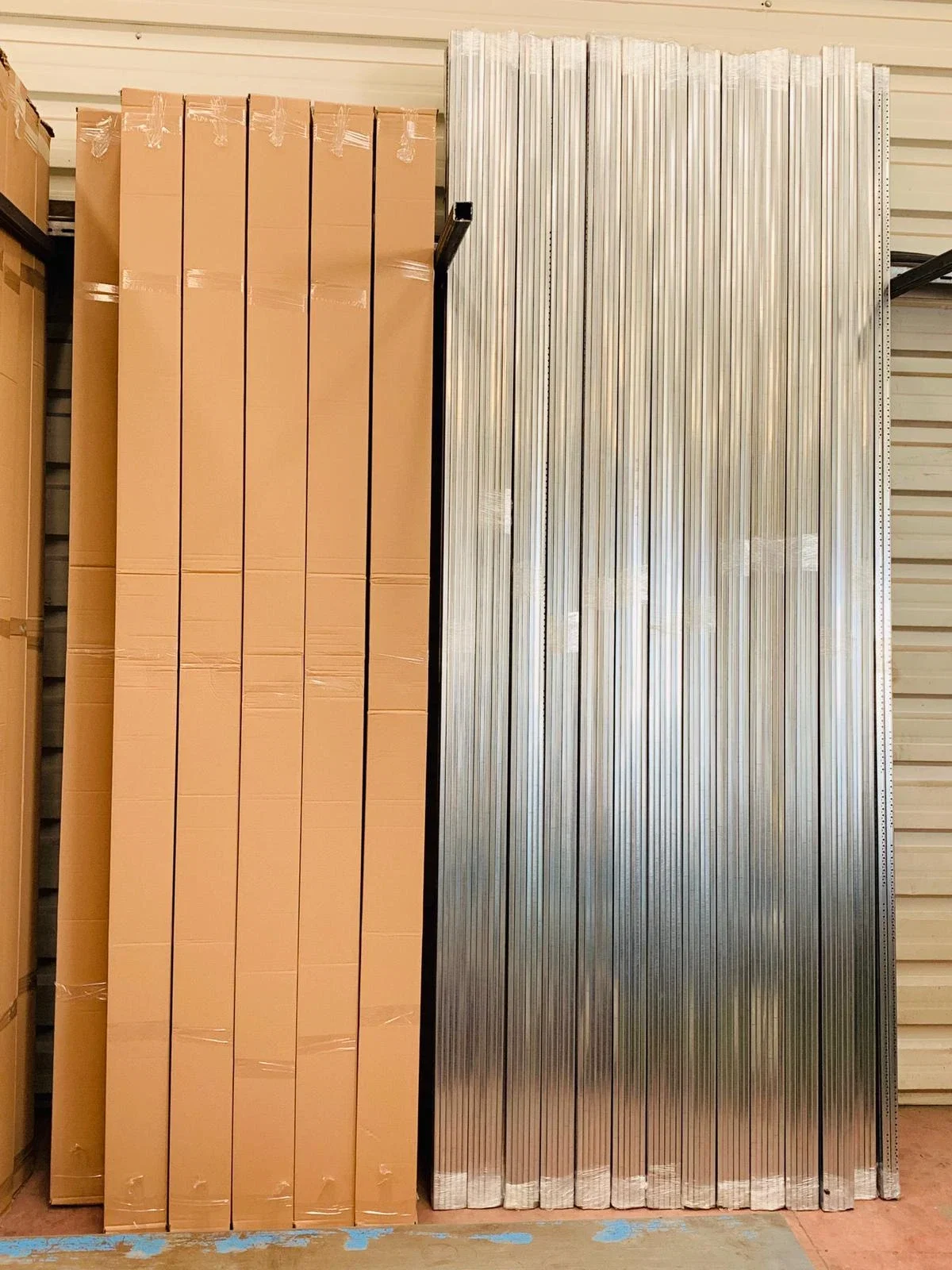
Drywall Z Profiles
Gypsum Board Z Profiles Gypsum board Z profiles are among the essential types of gypsum board profiles in the construction sector, offering advantages and features. Before explaining what gypsum board profiles are, let’s look at what gypsum board is.
Gypsum board is a covering material formed by placing gypsum between two sheets of cardboard. Gypsum board comes in many varieties and also has many profiles.
Depending on the location of use and the area used, it varies both dimensionally and in terms of features. Gypsum board produced on order can have the desired characteristics, sizes, and edge curves.
Gypsum boards are used in wall cladding, ventilation, finished interior facades, suspended ceilings, and other sections and processes. They appear in many other areas and have become even more widespread in modern times.
In addition to water-resistant and heat-resistant varieties, there are U, C, and gypsum board Z profiles. These three profiles, used in almost the same areas, actually form a complementary whole.
What Are the Advantages of Gypsum Board? Gypsum board provides thermal and acoustic insulation to the areas where it is used.
Additionally, it does not rot because its pH level is at a level that inhibits bacterial growth. The water particles inside the gypsum board also regulate the moisture balance of the environment it is in.
Because it is fire-resistant, it is considered an ideal option for fire prevention measures in buildings. Its flexible structure makes it a seismic-resistant material.
Profiles and varieties are available according to the area to be used. For example, the gypsum board Z profile can be cited as an example.
It is preferred for covering interior walls because it can be easily removed and installed, and corner varieties are available depending on the corners of the walls where it will be used. Gypsum Board Profiles Gypsum boards, which are used extensively in our daily lives and especially in construction, provide many advantages and have many features for the areas where they will be used, and they have profiles according to those areas.
Each profile has different functions, but they are generally used together. Gypsum board profiles are divided into wall profiles and ceiling profiles.
They have taken these names because they are used in wall cladding processes and suspended ceiling construction. Z Profile Usage Areas The gypsum board Z profile is generally used between a suspended ceiling and a wall in everyday life.
It is preferred at the junction of a suspended ceiling and a wall or at the junction of two walls. Because of its resemblance to the letter Z, the gypsum board Z profile, which has taken this name, prevents openings and cracks in the areas where it is used.
It also provides aesthetics and creates a decorative appearance. The gypsum board Z profile can be produced in desired sizes and thicknesses, is usually made on order, and provides ease of use and aesthetics in the areas with suitable size production.
The gypsum board Z profile, which is named according to the length of the Z bend, has been most widely used in 10, 15, and 20 mm sizes.